 Reviews


 Proudly American


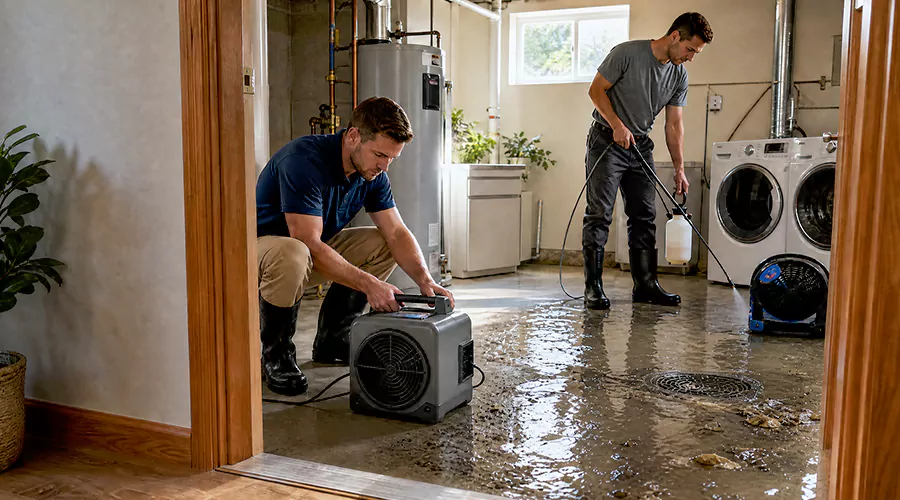
Sewage odor is removed by taking out contaminated material and cleaning the affected structure, while drying often continues for about 2 to 5 days. Odor that returns after ventilation usually means wastewater residue or damp porous material is still present beneath flooring or inside another hidden area.
Air fresheners can mask the smell, but they do not remove the source.
Why Does Sewage Odor Remain After the Water Is Gone?
Sewage odor can remain because extraction removes liquid water without removing every contaminated residue. Wastewater can penetrate carpet padding or drywall edges. It can also settle in floor joints where surface cleaning does not reach.
Common hidden odor sources include:
- Carpet padding
- Lower drywall
- Wet insulation
- Wood subflooring
- Cabinet toe kicks
- Crawl spaces
- Floor drains
- Contaminated debris
Sewage backup cleanup should address these materials before deodorizing products are considered.
What Should You Remove Before Cleaning?
Porous materials that directly absorbed sewage are difficult to clean fully and can keep releasing odor after the room looks dry. Removing them also exposes the surfaces below for proper cleaning.
| Material | Typical Response After Direct Sewage Contact |
|---|---|
| Carpet padding | Remove |
| Saturated drywall | Remove affected section |
| Contaminated insulation | Remove |
| Cardboard | Discard |
| Sealed tile | Clean and disinfect |
| Sound wood framing | Clean then dry |
| Sealed concrete | Clean then dry |
Raw sewage cleanup becomes more effective once contaminated absorbent material is no longer trapping wastewater against the structure.
How Should Hard Surfaces Be Cleaned?
Hard surfaces should be cleaned before they are disinfected. Cleaning removes dirt and organic residue that can interfere with a disinfectant.
Use this sequence:
- Remove loose contaminated debris.
- Wash suitable hard surfaces with detergent.
- Remove the dirty cleaning solution.
- Apply an appropriate disinfectant.
- Follow the product's contact time.
- Remove remaining moisture as directed.
- Begin controlled drying.
Never mix bleach with ammonia or another cleaning chemical. Follow the product label rather than making stronger mixtures.
Why Is Drying Important for Odor Removal?
Drying matters because damp building materials can keep producing musty or sewage-like smells after visible contamination has been removed. Wet wood can also hold odor longer than a sealed surface. Building materials should begin drying as quickly as possible. A moderate residential loss often needs about two to five days of structural drying after contaminated water is removed. Use moisture readings instead of smell alone to judge progress. Odor can fade before a subfloor reaches a normal dry condition.
Can Carpet Be Deodorized After Sewage Exposure?
Wall-to-wall carpet that directly absorbs sewage is generally not a good candidate for routine deodorizing. Wastewater can pass through the fibers into the backing and padding below. Cleaning only the carpet face can leave contaminated padding underneath. That hidden layer can make the odor return when the room is closed. Area rugs can be removed for separate evaluation before disposal.
Can Sewage Odor Come From Walls?
Yes. Lower drywall can wick wastewater above the visible water line. Insulation behind the wall may also become contaminated.
Signs that the wall may be holding odor include:
- The smell is strongest near the baseboard.
- Drywall feels soft.
- Paint begins bubbling.
- A stain grows after cleanup.
- Baseboards remain swollen.
- Moisture readings stay high.
- Odor returns after the room is closed.
- Mold appears near the affected area.
Sewage damage restoration may require removing affected drywall so the cavity can be cleaned and dried.
What If the Odor Is Coming From a Crawl Space?
A crawl space can hold sewage odor for days when wastewater reaches soil or insulation. The smell may then move into living areas through gaps in the floor system. Crawl space sewage cleanup should address standing wastewater before contaminated insulation is removed. Exposed structural surfaces then need cleaning and controlled drying. A new vapor barrier should not simply cover wet contaminated soil. Remaining contamination should be addressed first.
How Can You Tell Whether the Odor Source Is Gone?
A closed-room test is a useful way to check whether source cleaning worked. Ventilate the area after cleaning, then close doors and windows for several hours once the space is dry enough. Return without opening the windows first and note where the smell is strongest. Check baseboards or cabinet interiors separately. Persistent odor in one location can point toward a missed porous material or hidden cavity.
What Should You Avoid When Treating Sewage Odor?
Odor treatment can fail when products mask the smell before the contamination is removed. Strong fragrance does not provide proof that a surface is clean.
Avoid these mistakes:
- Spraying fragrance over contaminated carpet
- Installing new flooring over a damp subfloor
- Painting wet drywall
- Covering contaminated soil with plastic
- Mixing household chemicals
- Running contaminated HVAC equipment
Sewage clean up should solve the source before cosmetic repairs begin.
When Should You Call a Professional?
Professional help is appropriate when odor remains after accessible contaminated materials have been removed and hard surfaces have been cleaned. Persistent smell can point to sewage inside wall cavities or other areas that are difficult to inspect safely.
Consider professional assessment when:
- Odor remains strong after several days of drying.
- Several rooms were affected.
- Sewage entered walls.
- A crawl space contains contamination.
- HVAC components were exposed.
- Mold has appeared.
- Electrical systems were affected.
- The odor source cannot be located.
Many 2026 sewage cleanup projects cost roughly $2,000 to $10,000 when professional extraction and material removal are required. Large structural losses can exceed that range.
How Can You Keep Sewage Odor From Returning?
Odor is less likely to return when the backup source has been corrected and affected materials reach normal moisture conditions before reconstruction.
Use this final checklist:
- Repair the sewer or drain problem.
- Remove contaminated porous material.
- Clean hard surfaces before disinfecting.
- Track moisture during drying.
- Replace finishes only after drying.
- Recheck closed rooms for odor.
Conclusion
Sewage odor disappears when the contaminated source is removed and the affected structure is fully dried. Carpet padding or drywall can keep releasing odor even after standing water is gone. Clean hard surfaces before disinfecting and avoid masking the smell with fragrance. If odor returns after several days of drying, professional assessment can help locate contamination beneath floors or inside other concealed building areas.
Frequently Asked Questions
How long should sewage odor last after cleanup?
Odor should decrease as contaminated materials are removed and drying progresses. Strong persistent odor suggests a remaining source.
Will bleach remove sewage smell?
Disinfectants can be part of cleanup, but bleach alone will not remove sewage trapped inside porous materials.
Can baking soda remove sewage odor?
It may absorb mild surface odors, but it cannot correct sewage contamination beneath flooring or inside walls.
Why does the smell return when the room is closed?
Ventilation can dilute odor. A closed room allows smell from remaining contaminated materials to build up again.
Can sewage odor remain in concrete?
Residue can remain on porous concrete. Proper cleaning and drying are needed before deciding whether odor treatment is complete.
Should new flooring be installed if the odor is gone?
Only after the subfloor has been cleaned and has reached suitable moisture conditions.